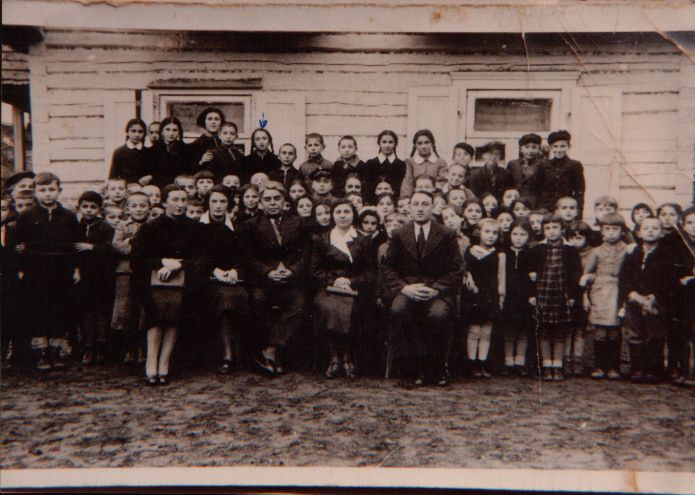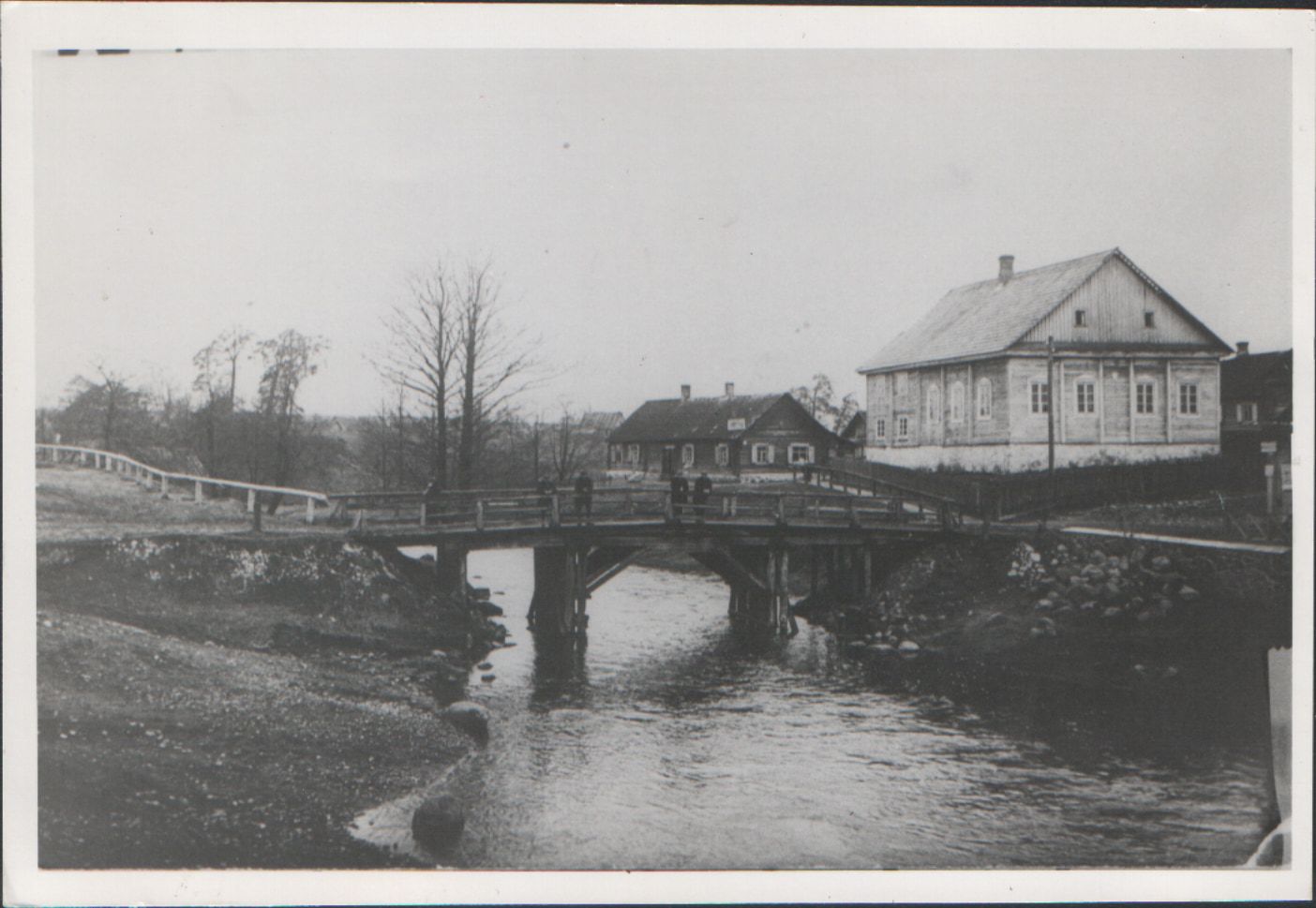
The Story of the Town
Introduction and Background
On memory, on the second generation, and on Lithuania and the Jews who lived there
In the past, stories and knowledge were kept and handed down from generation to generation, as an inheritance from father to son and from mother to daughter. People remembered, knew and were familiar with the details of their family line, with the personal, social, family and community stories. This knowledge was told and passed on over many years, and so a chain was formed of strong links woven one into another.
During the Second World War the Holocaust of the Jewish people took place, leaving a deep and bloody mark. The links in the chain of generations were severed. Whole families were wiped out and left without a trace, many communities were erased from the face of the earth, and the heritage was cut off. An entire generation lived through suffering, fear, deprivation, horrors and evil beyond comprehension. It was the fate of this generation to live all the days of its life with the pain, the memories and the longing.
During the war and after it, personal memory was pushed to the bottom of the list of priorities. It was more important to survive, to gather up the fragments, to rebuild, to create a new society in a new homeland, to raise and bring up families, and to live.
We, the second generation, have a role and a message. It is our duty to gather the memories and the stories, to join the pieces together, and to put them into a form that gives meaning to our lives.
“And you shall tell your children” — this is neither a request nor a recommendation. It is a commandment that keeps our tribe’s campfire burning.
Judaism holds a particular commandment found in no other religion: “And you shall tell your children” (Exodus 13:8). It ensures that the heritage passes to the generation to come. It ensures that tradition is preserved; it ensures the preservation of personal and collective historical memory. It is our duty to remember, and to pass the heritage on to those who come after us.
The Yizkor books
- In 1965 a Yizkor book for the Švenčionys region was published, in which natives of Pabradė and Kemelishok also wrote.
- In 2000 the Yizkor book for Pabradė — a community that was destroyed — was published, edited by Arie Havkin.
- In 2004 Shmuel Karol’s book “Mulik the Zhulik” (“Mulik the Rascal”) was published.
About the name of the town
The town has as many names as the powers that have ruled it. In Hebrew and Yiddish it is written פודברודז’ (פּאָדבראָדז), rendered in Latin letters as Podbrodz; in Polish Podbrodzie; in Lithuanian, its official name today, Pabradė, often written Pabrade without the diacritic; and in Russian Подбродзе. The name comes from the Polish word “bród” — a ford, a shallow place in a river where it can be crossed. On this site we use the Lithuanian name Pabradė, alongside the other names, so that anyone searching for the town, in any language, will find it.
Lithuania — facts and a brief historical background
Lithuania lies in Europe. It is one of the three Baltic states on the eastern shore of the Baltic Sea, and the southernmost of them: Lithuania, Latvia and Estonia.
- Area: 65,200 square kilometres (three times the size of the State of Israel)
- Population: 3.6 million. Composition: 80% Lithuanians, 9% Russians, 7.5% Poles, 2% Belarusians.
- Capital: the city of Vilnius, with 560,000 inhabitants
- Independence from the Soviet Union: 6 September 1991
- Government: parliamentary democracy
- Religion: most of the population is Catholic
Lithuania is a flat country; its highest point is 292 metres above sea level. It has 2,800 lakes. The climate is temperate — the winter is cold and snowy, with temperatures falling below zero, and the summer is warm and pleasant. Rain falls in every season of the year.
25% of the country is covered by forest, mostly pine and spruce. Its wildlife includes deer, wolves, foxes, wild boar, otters, ducks, wild geese and swans.
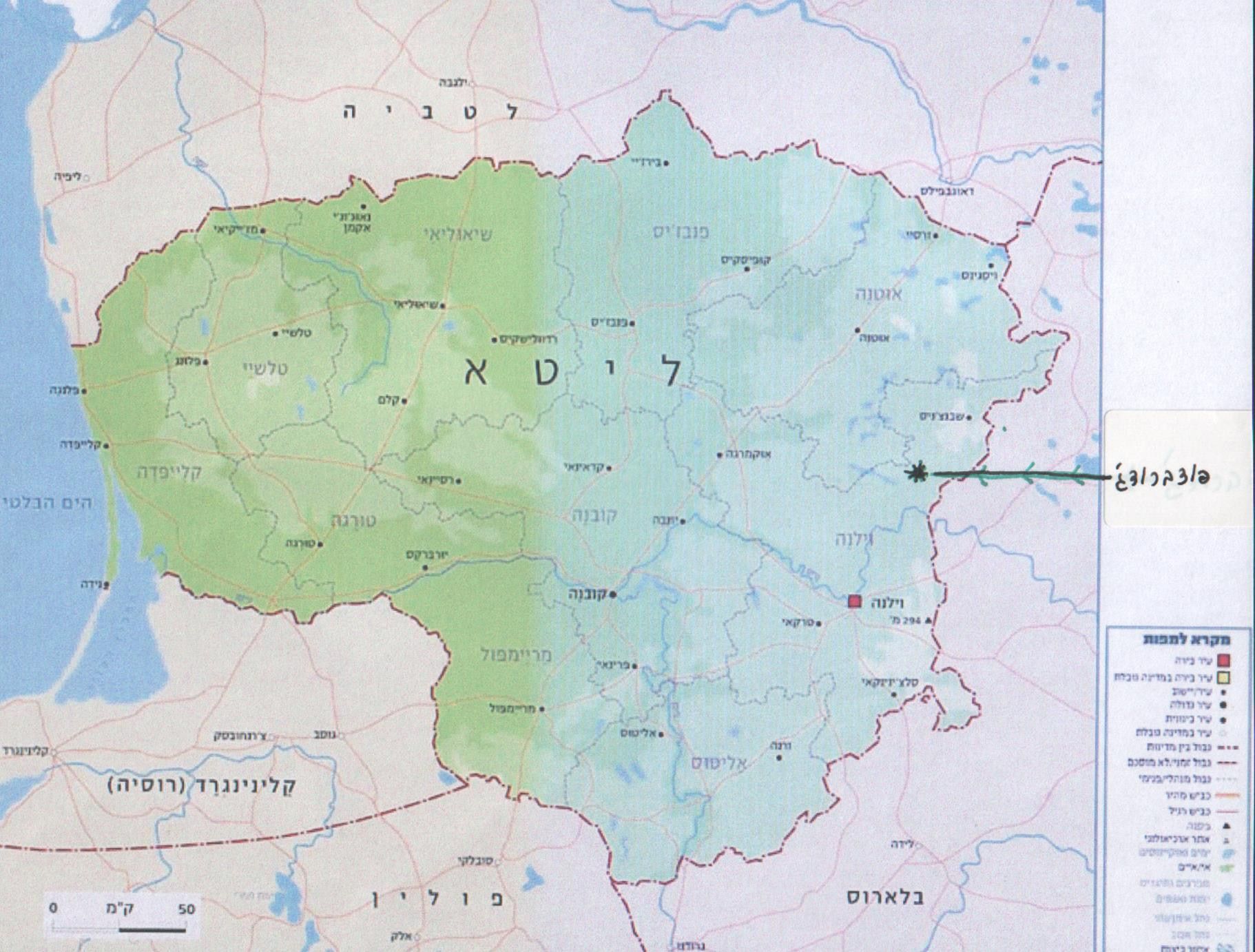
Historically, Lithuania is considered a state from the crowning of Mindaugas as King of Lithuania in 1253. Later, in the course of the conquests of Gediminas, Lithuania became part of the independent, multi-national Grand Duchy of Lithuania, which also included parts of Belarus and Ukraine. In 1386 the Grand Duchy was united with Poland.
In 1569 Poland and the Grand Duchy formally merged into a new state, the Polish–Lithuanian Commonwealth. The union remained in force until the Polish Constitution of May 1791, which abolished all the provincial divisions and merged them into the Kingdom of Poland. Shortly afterwards the new kingdom was partitioned between the Russian, Prussian and Austrian empires.
Lithuania regained its independence in 1918 within limited borders. It lost most of its territory to the Soviet Union, and was troubled by territorial disputes with Poland and Germany. In the years 1918–1939 Vilna, the country’s capital, was under Polish rule, and the city of Kovno served as the temporary capital. Lithuania never recognised Polish control of Vilna.
In 1939, following the Molotov–Ribbentrop Pact and the partition of Poland between Germany and Russia, Russia demanded that the city of Vilna be returned to Lithuania and that Lithuania remain within its sphere of influence. This is the reason for the Russian invasion of Lithuania in June 1940. In 1941 the Germans broke the pact and conquered the territories under Russian control, including Lithuania. In 1944 the Soviets took Lithuania back from the German army, and it once again became a socialist republic of the Soviet Union, until 1990.
The Jews of Lithuania
Jews arrived in Lithuania in the 14th century; in the 15th century they were expelled, and in the 16th century they were allowed to return. They were subject to persecution. From the 17th century Lithuanian Jewry was renowned for its centres of Torah learning. Towards the end of the 18th century and the beginning of the 19th came a renewal and a surge of energy inspired by Rabbi Eliyahu, the “Gaon of Vilna”, and Lithuanian Jewry won a place of pre-eminence in the Jewish world.
The Jews of Lithuania, known as “Litvaks”, had a reputation for scholarship. Lithuania was home to famous yeshivas such as Mir, Volozhin, Telz, Slobodka and Ponevezh. Lithuania was a stronghold of the opponents of Hasidism.
During the 19th century Lithuania saw extensive Zionist activity — it was a centre of Hovevei Zion and of the Bund, and a centre of the Haskalah and of Hebrew literature.
In October 1939 about 250,000 Jews lived in Lithuania, making up 10% of the population. The Jews of Vilna made up 30% of the city’s population, and the city was known as “the Jerusalem of Lithuania”.
At the end of the Second World War, the number of Lithuanian Jews who had survived the Holocaust in the areas under Nazi control was estimated at about 8,000, and the number of Lithuanian Jews who survived in the areas under Soviet control at about 4,000. Most of the survivors emigrated to Israel, a minority to the United States.
Today about 5,000 Jews live in Lithuania, concentrated in the capital, Vilnius, and in Kaunas.