The Story of the Town
Before the War
Jewish life in the town — from its founding on the riverbank to the summer of 1939
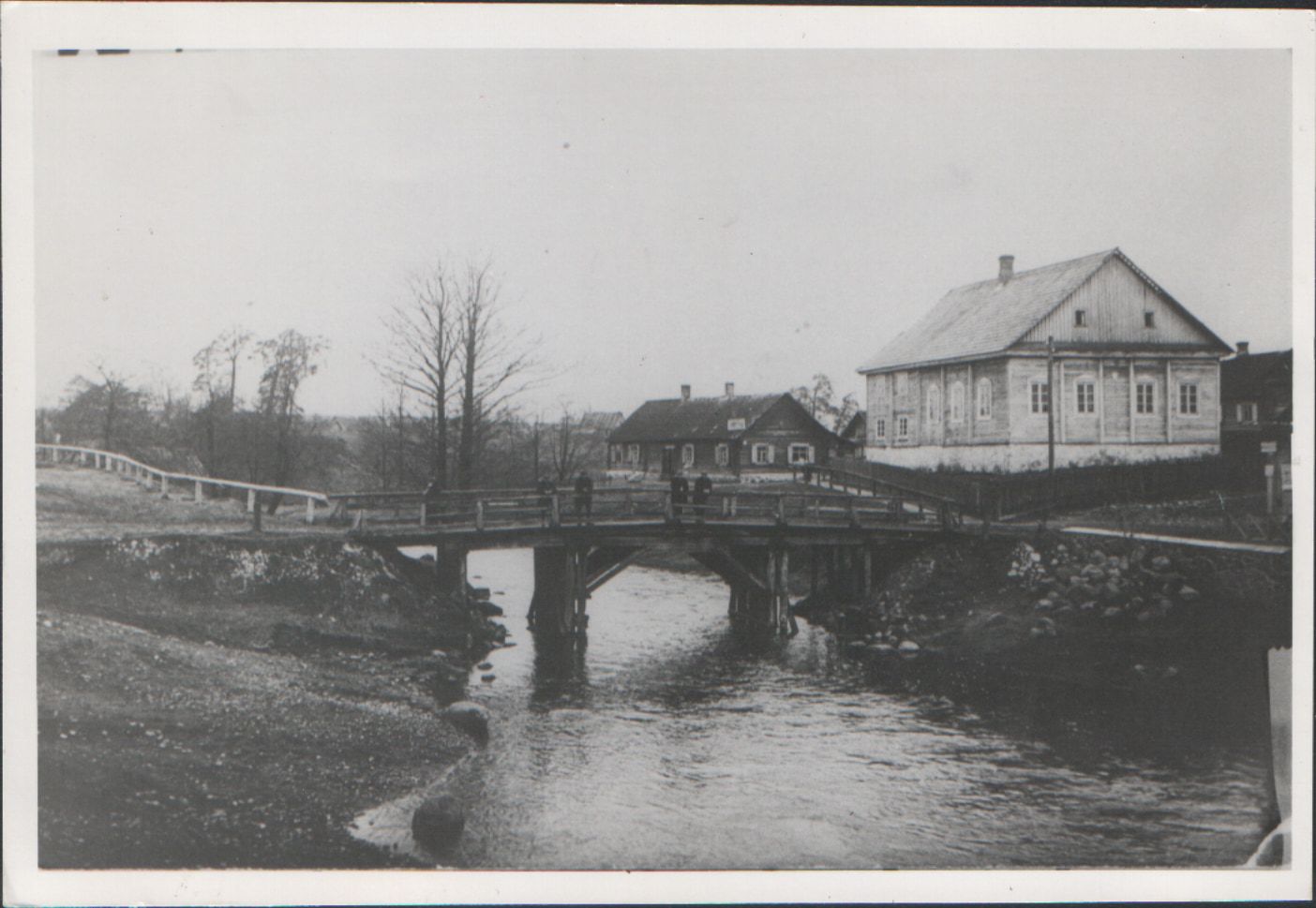
Pabradė (Podbrodzie) was founded in the years 1863–65 at the meeting point of two rivers that ran through it: the Žeimena and the Dubinga. The meaning of the town’s name, hard as it is to pronounce, is tied to the river — it comes from the Polish word “bród”, a ford, a shallow place in a river where one can cross.
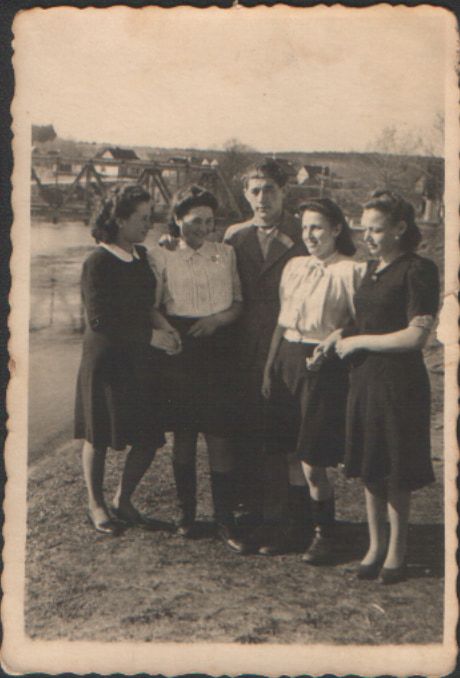
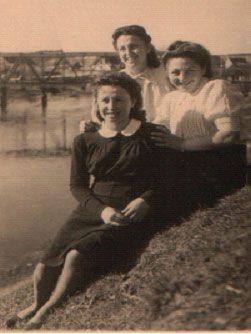
Mira Shapira, Brinele Ptashnik, Zvi Mirsky, Yocheved Plotnik and Miriam Bartnisky — on the riverbank before the war
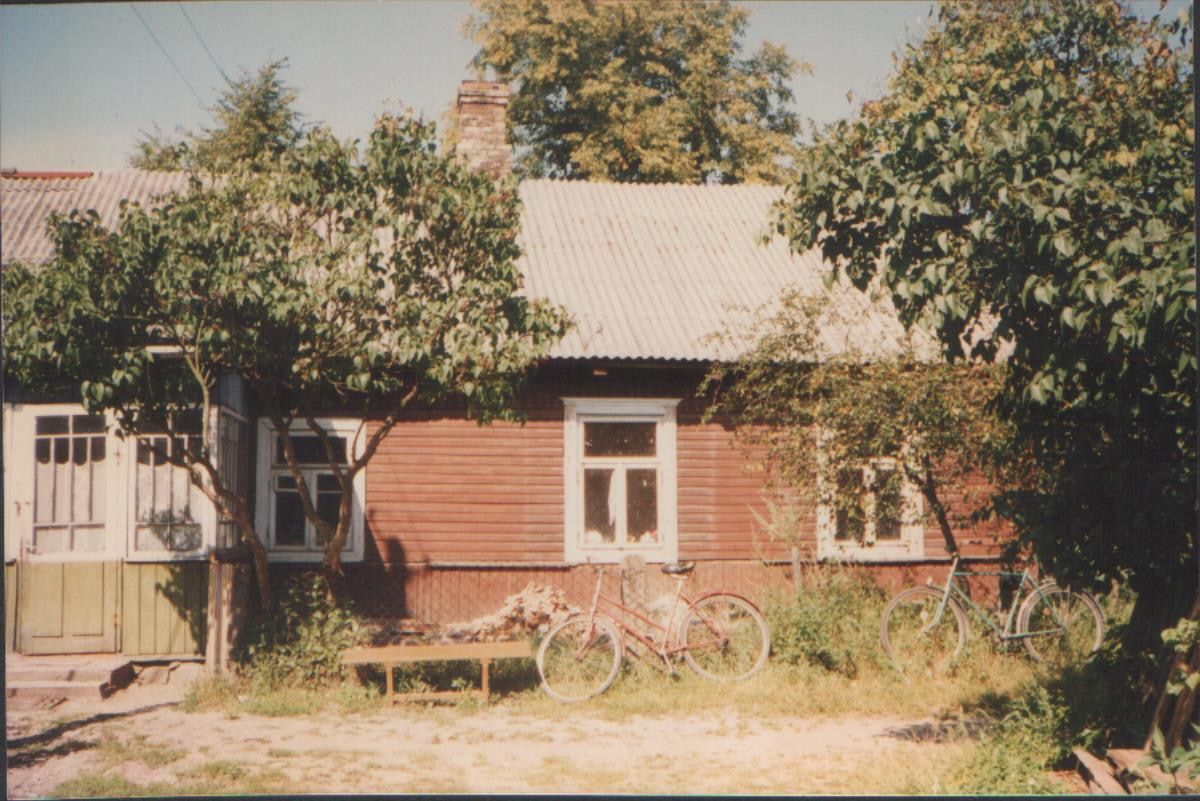
Pabradė was a typical shtetl, with one long main street lined with wooden houses of one or two storeys. Around the houses was a plot of land used for growing vegetables and fruit, for chicken coops, and even for cowsheds.
The great difference between this town and the other shtetls was that Pabradė was granted the status of a city by the ruler of Poland in the 1930s. As a result, the town had a municipality, a mayor and a city council, on which Jews also sat. The story of how the town came to receive city status is a fascinating and curious one.
Here is the story as it was told: when the Poles were struggling to win their independence and throw off the yoke of the Tsars, Józef Piłsudski, who would later seize power with the help of the army, planned to capture a train carrying the Tsar’s soldiers and a considerable “treasure” — money collected in taxes. He got help from a Jewish gang from Vilna called “Hershke Halbe Challah” (Hershke Half-a-Challah — there is surely a story behind that name too). This gang was in the business of taking — more precisely, stealing — money from the rich and distributing it among the poor Jews of Vilna. The train stopped about 9 km before Pabradė, at a station called Parczew — the station next to the estate of Count Parczewski.
When the train carrying the tax money came to a halt, on one side of it stood Piłsudski, his soldiers and the Jewish gang, and on the other side the Tsar’s soldiers. The train robbery succeeded and the money was taken.
In time, the Jewish gang of “Hershke Halbe Challah” got into trouble and its members were put in prison. Piłsudski seized power in 1926 and established an authoritarian presidential regime. The gang appealed to him to help get them released, and to their surprise he did even more: he had them released, and thanked them as well.
And so Pabradė, lying close to the station where the robbery that helped him seize power had taken place, was given the honour of being raised from a town to a city.
The Town
The town had about 3,000 inhabitants, a third of them — about a thousand — Jews; the rest were Poles, Russians, Lithuanians, Germans, one Karaite and one Tatar.
The town’s railway station was an important transport artery on the railway line connecting Warsaw and St Petersburg, and it stood on the main road.
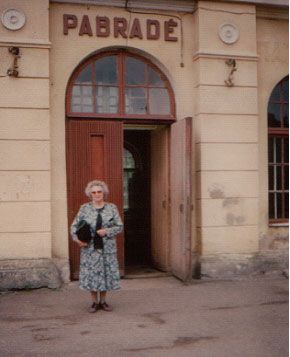
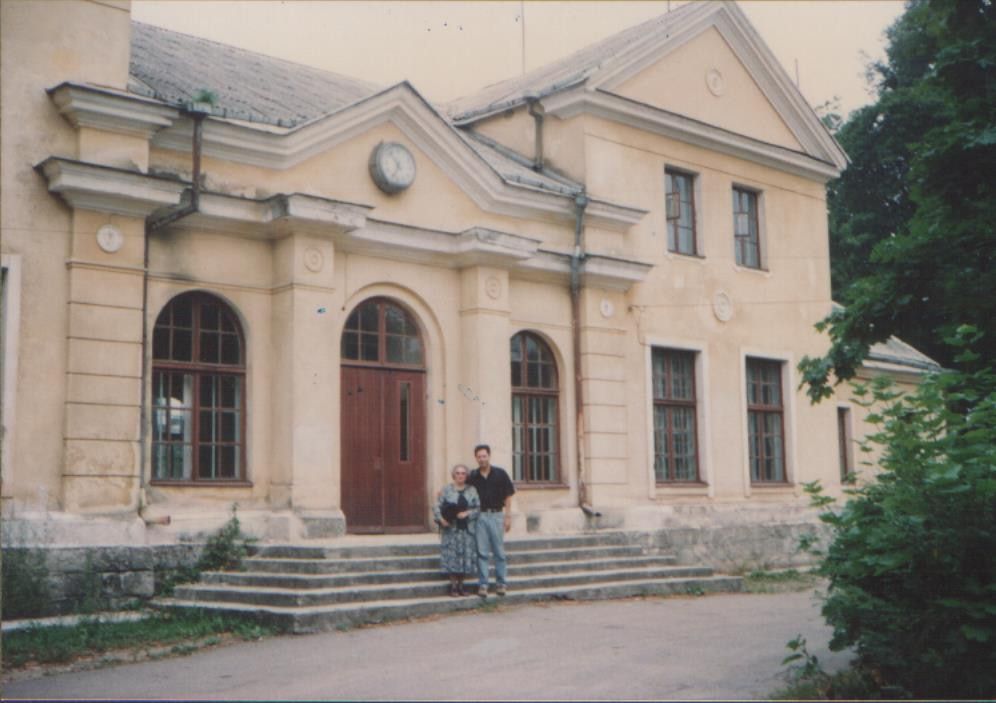
The railway station of Pabradė
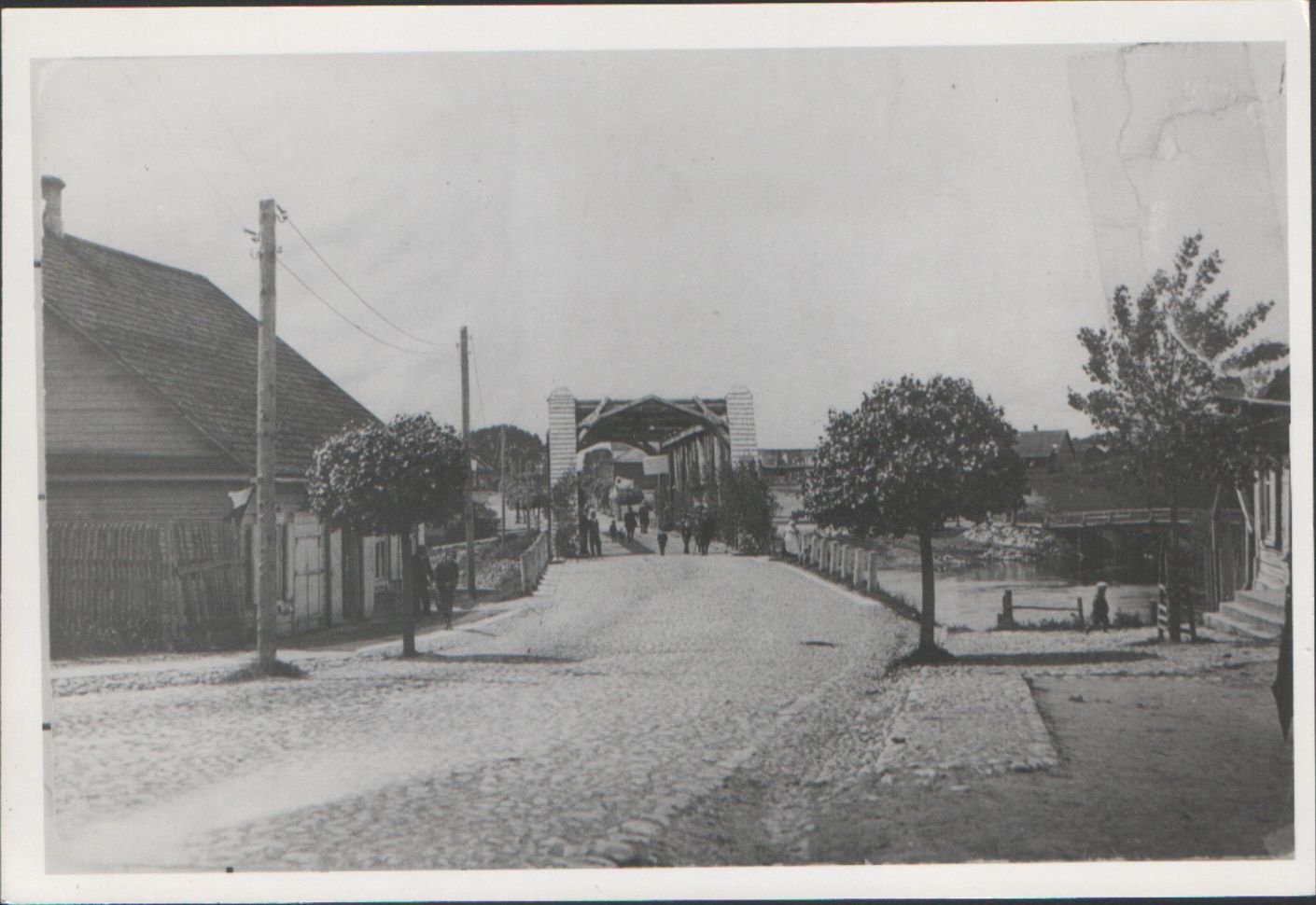
The town’s central street was Vilna Street, which crossed it from the north and ran as far as the bridge. South of the bridge was Piłsudski Street, which ran as far as Švenčionys Street in the south.
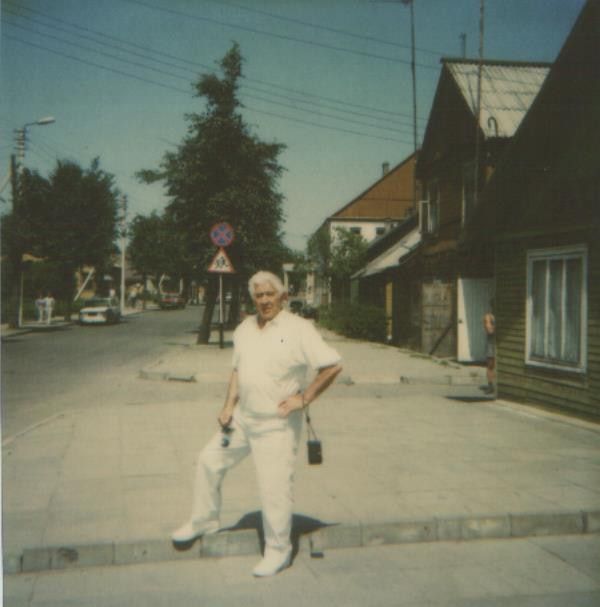
On Kishoner Street were the Tarbut school, the fire station, the house of the police commander (the commandant), the “Rolnik” shop and, beside it in a lane, the police station. Opposite the school lived the town’s only doctor — Dr Rozewski.
40% of the Jews were engaged in trade and peddling, 30% in smithing, tailoring and shoemaking, and the rest in casual work. Every Monday a weekly market was held north of the bridge, to which villagers came to sell and buy produce and goods. It was a market teeming with people.
The picturesque and peaceful town became known as a holiday and summer resort, thanks to the waters of its rivers and the abundance of dense forests of birch, pine, cypress and spruce that surrounded it. Every summer holidaymakers came to it in great numbers — “dachniki” — to apartments, rooms and boarding houses. The guest houses of Schmidt, Becker, Malczadski and Grafung were well known and famous. Shapira’s café was also known for its delicious ice cream. Many Jews earned their living supplying food and services to the holidaymakers. The town’s name travelled far.
Winter in the town had a beauty of its own too, when everything was covered in snow and the rivers froze over, and people went sledging, skating and skiing on them.
Those were beautiful, pleasant days, remembered with fondness.
The Synagogues and the Rabbi
There were two synagogues in the town, to which the Jews came on Sabbaths and festivals — the old synagogue and the new synagogue. The town’s rabbi was Moshe Perski, who delivered the sermons. The rabbi was an exceptional scholar and a God-fearing man. The synagogues also served as a place of social gathering, and a place where people caught up on the news from the surrounding area and from the world.
There were two ritual slaughterers in the town; one of them was Chaim Shalom Ptashnik, a kind-hearted and learned Jew. There was also a “melamed”, a teacher of small children — Reb Zalman Itzik, under whose rod many children passed.
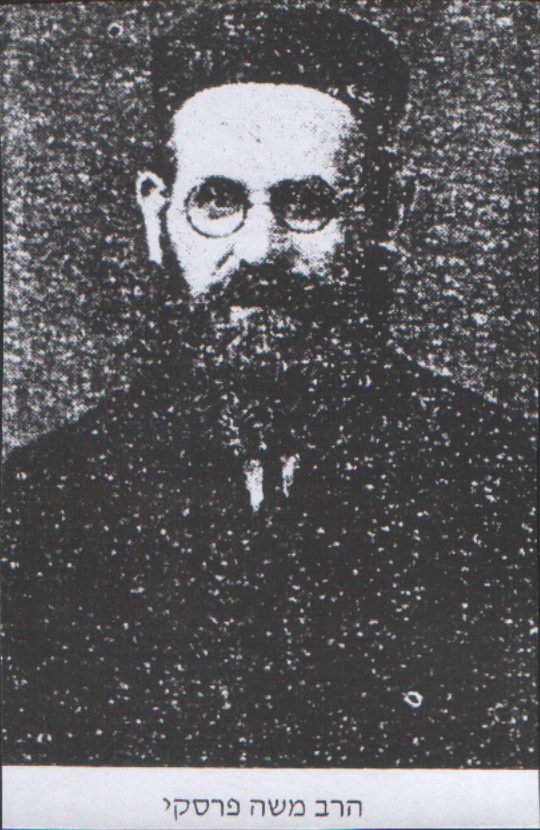
Moshe Perski served as the town’s rabbi for close to a quarter of a century, between the two world wars. He was an exceptional scholar, God-fearing, and an excellent preacher. He attended faithfully to the needs of the community and led his congregation with a firm hand. He was appointed rabbi of Pabradė after the First World War. The rabbi, who was anxious about the education of the young generation studying in modern schools, fought for the founding of a religious school in the town, and fought the Yiddish school with all his might, until it was done away with and closed. He made enormous efforts to preserve the traditional character of the Tarbut school. He saw to it that Jewish studies were taught, so that the pupils would be learned in Torah and keep the tradition.
Rabbi Perski was loved and revered. He was respected for the sharpness of his mind, his wisdom, his courage, his integrity and his devotion to his community. His sermons were extraordinary and drew a wide audience; he used legends, midrashim and melodies alongside halakha. His sermons were a cultural event that young and old flocked to hear. In addition to his devotion to Torah and tradition, he was also a lover of secular learning and general culture. All his life he lived in straitened circumstances, walked humbly, helped and supported everyone in need, and always put the community before himself and his family.
The Tarbut School
The town’s schools played an important part in its cultural and Zionist life. After the First World War a school was founded whose language of instruction was Yiddish; it closed after a few years for lack of facilities and means.
In the years 1918–1939, between the two world wars, the Jews of Poland knew years of cultural and social flourishing. Tarbut schools were established, belonging to an independent network supported by Zionist Jews, and their tuition fees were progressive — each family paid according to its means. At Tarbut all subjects were taught in Hebrew, and the pupils were given a knowledge of the roots of Jewish and Hebrew culture. Naturally, they also studied the Polish language and Polish history. This detail explains the very good command of Hebrew that the pupils acquired. Books even arrived from the Land of Israel; since there were not enough books, the pupils studied in groups.
And indeed, in 1924 a Tarbut school opened in Pabradė, and it continued until the outbreak of the Second World War. The school educated its pupils in national values and strengthened their bond with the Land of Israel. In its early days the school operated in the house of Abrasha Karol, on the second floor. The first teachers were: Kopilovich — Bible and Hebrew; Danishevsky; Chanan Blitz — geography, nature and mathematics; the teacher Helena taught Polish. Later, Azriel Ptashnik, Malka Licht, Yosef Gindlin, Gita Muller and Esther Spektor also taught there.
A parents’ committee was elected, which worked with the school and was involved in every area: teaching, social matters, requests and complaints. “Flower days” were held, on which donations were collected for the Jewish National Fund, and on the committee’s initiative celebrations were held to mark events in the Land of Israel, such as the Balfour Declaration and the First Congress in Basel. Memorial and mourning assemblies were also held for decrees and events, such as the bloody riots in the Land of Israel in 1929 and 1936.
The members of the committee were educated, bookish people, Zionists and patriots. In 1936, for example, the committee included Alter Zilber and Itche Perski — the son of Rabbi Perski. A curious phenomenon was that the school committee was made up mainly of young women and men from Hashomer Hatzair. The school’s good name spread through the region and it became the pride of the town.
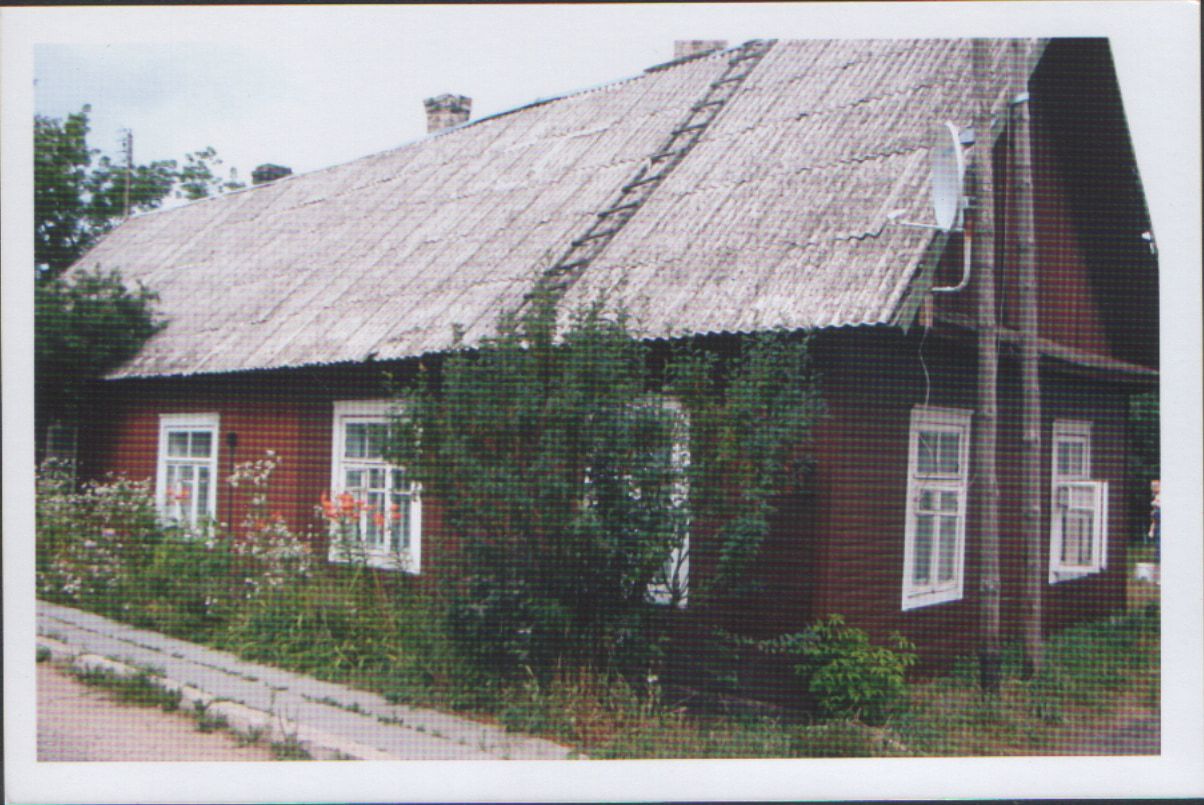
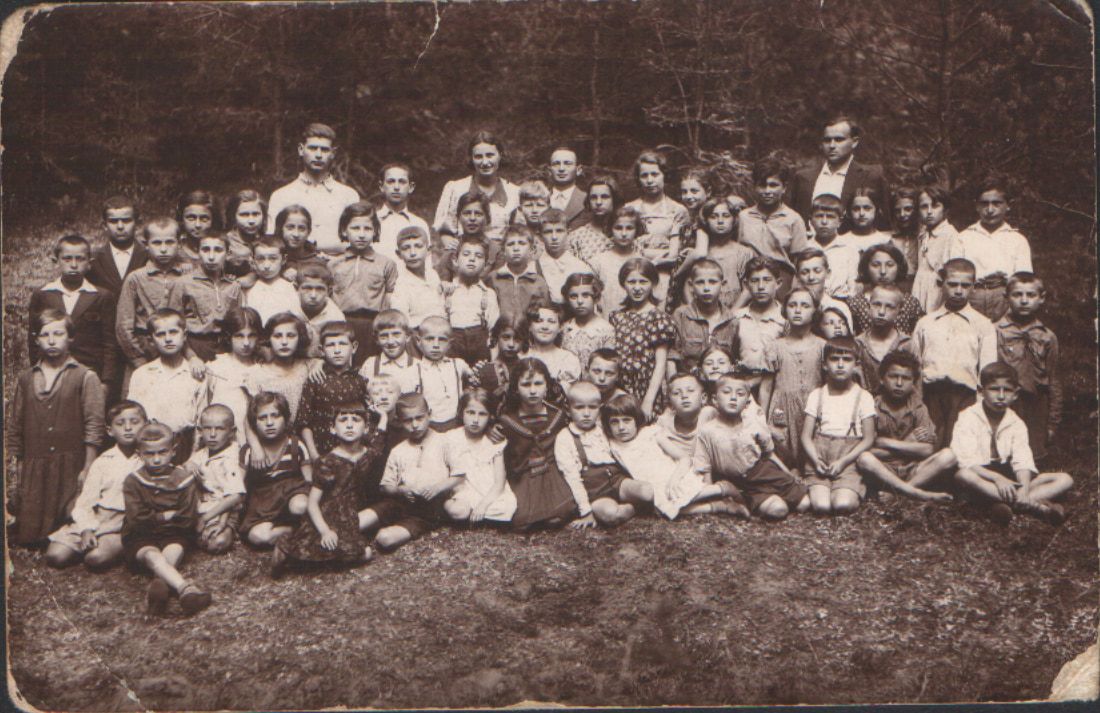
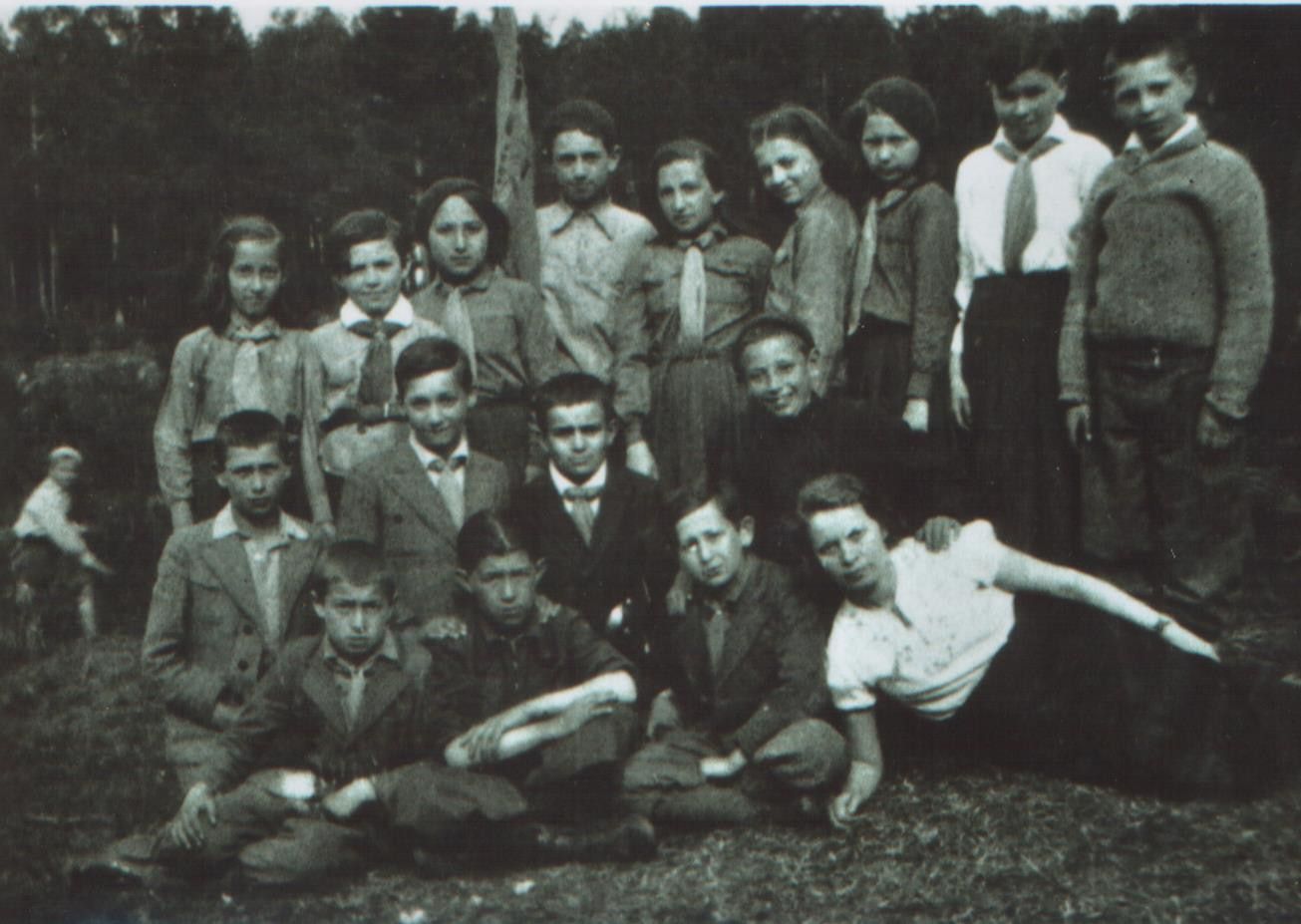
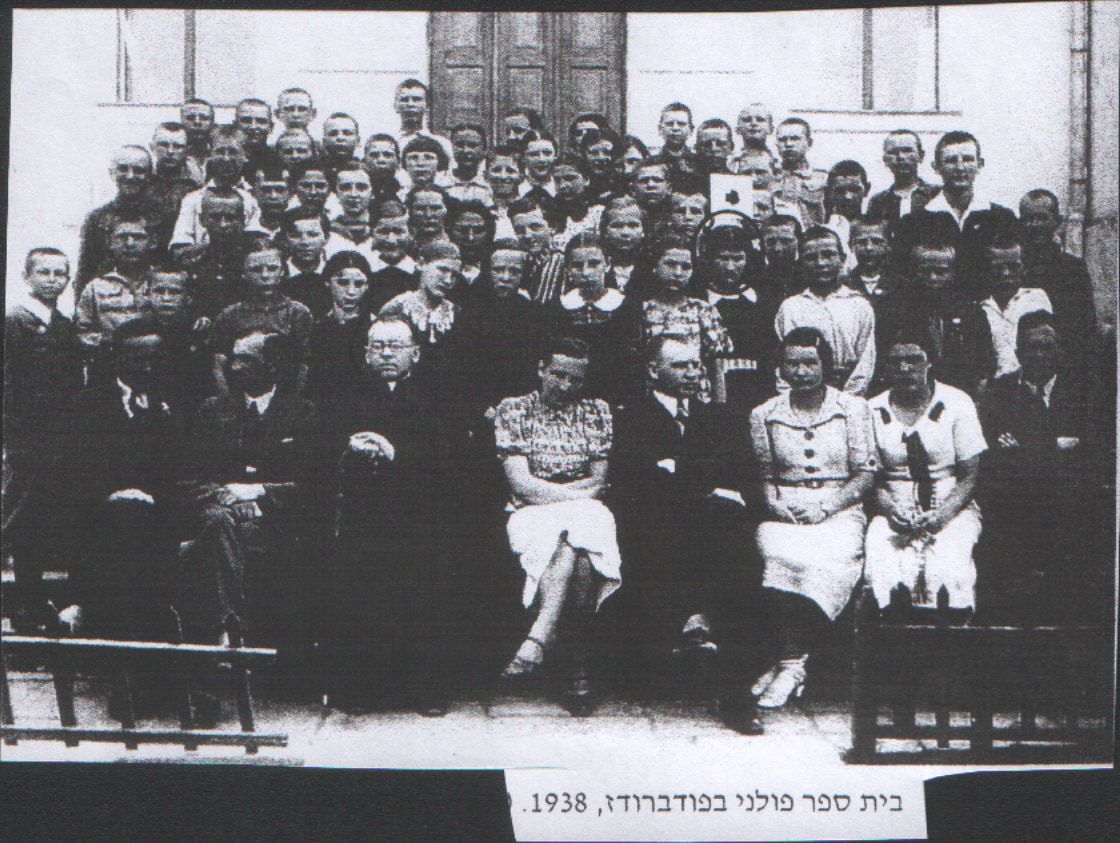
Not all the Jewish children studied at the Tarbut school; some studied at the Polish “Powszechna” public school, which stood on a high hill.
The Golden Youth
In the 1930s Zionist movements of various streams began to flourish in the town: Hechalutz, Poalei Zion, Hashomer Hatzair, Hapoel Hamizrachi, Beitar, the Bund, and a few Communists.
The town’s wonderful young people were called “the golden youth” and “the diamond youth”. They studied in Vilna and were Zionist patriots. Most of them went to study in Mandatory Palestine.
The first of these young people reached Palestine as early as 1929, and more continued to arrive in the early 1930s. Here are their names: Natan Mirsky, Nachman Levi, Aharon Bursky, Grunia Urman and her husband Yerachmiel Ptashnik, Avraham Rivkind, Shalom Shklarovich, Miriam Yonina, Mordechai Kopilovich, Elisheva Skurkovich, Natan Perski and his wife Sonia, Avraham Charmatz, Mordechai Bartnisky, Shabtai Mirsky, Chayuta Epstein and others.
Given the strong bond with the Land of Israel, it is no wonder that a great celebration was held in the town when the Hebrew University in Jerusalem was founded.
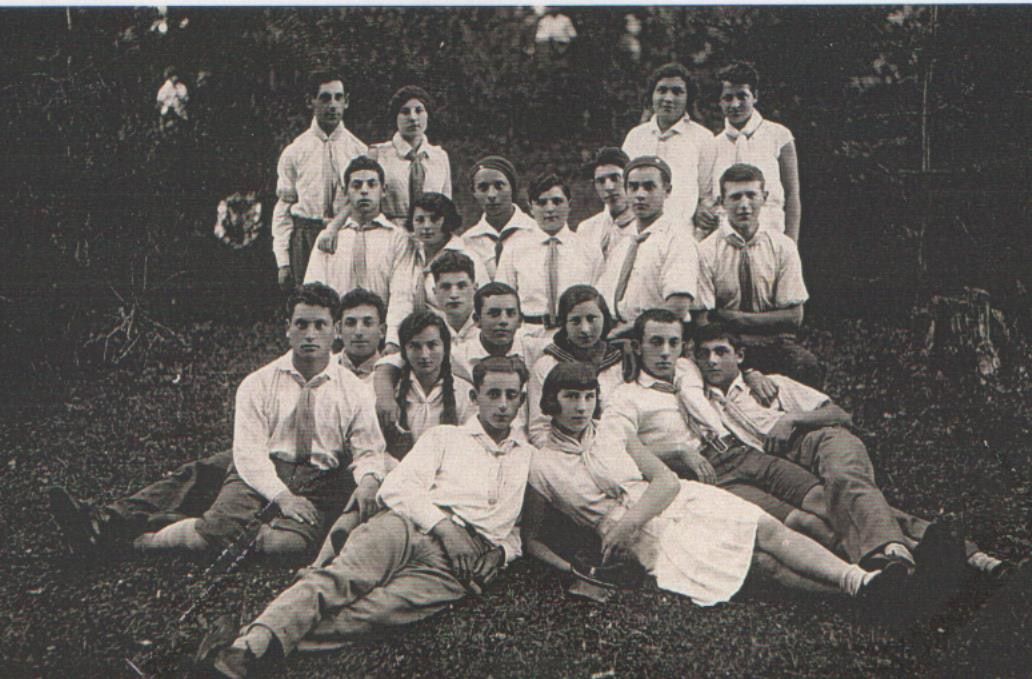
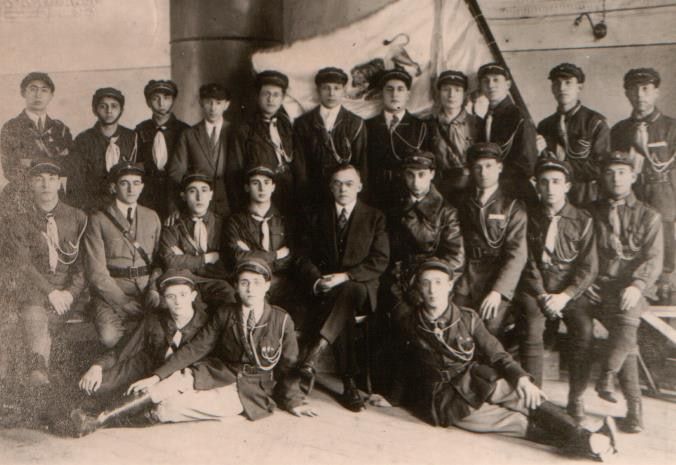
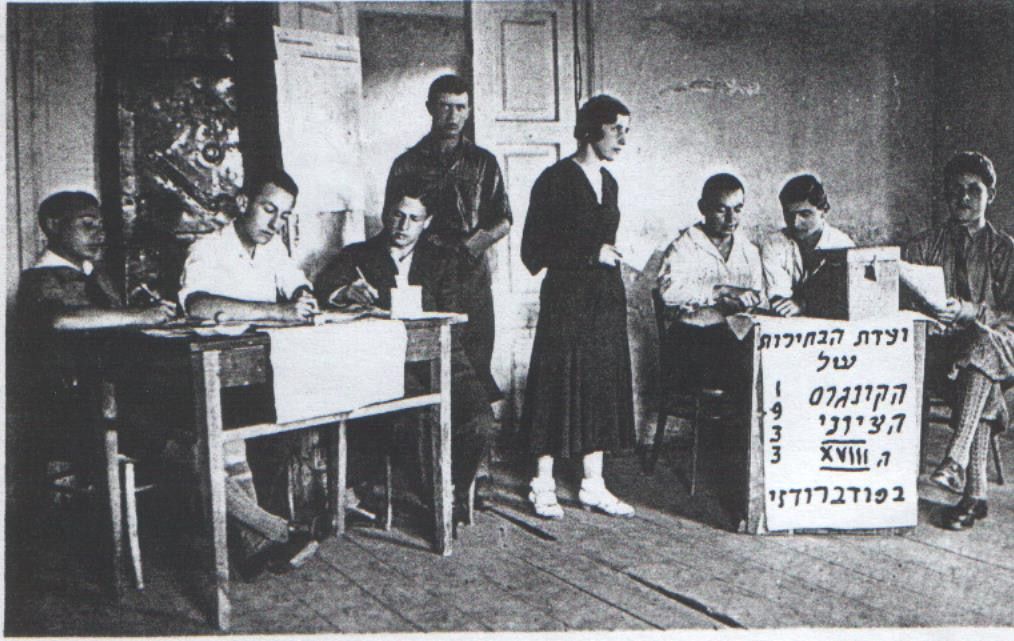
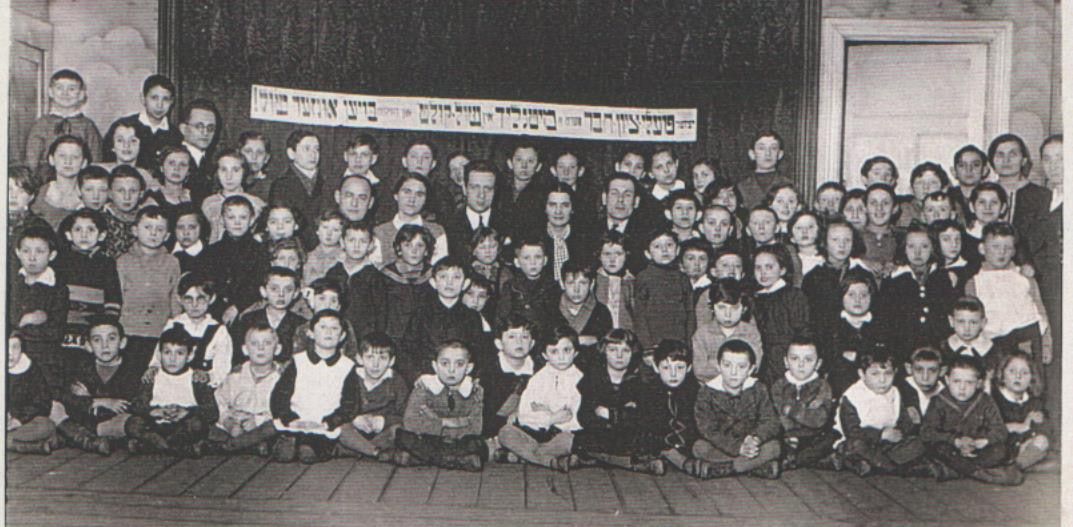
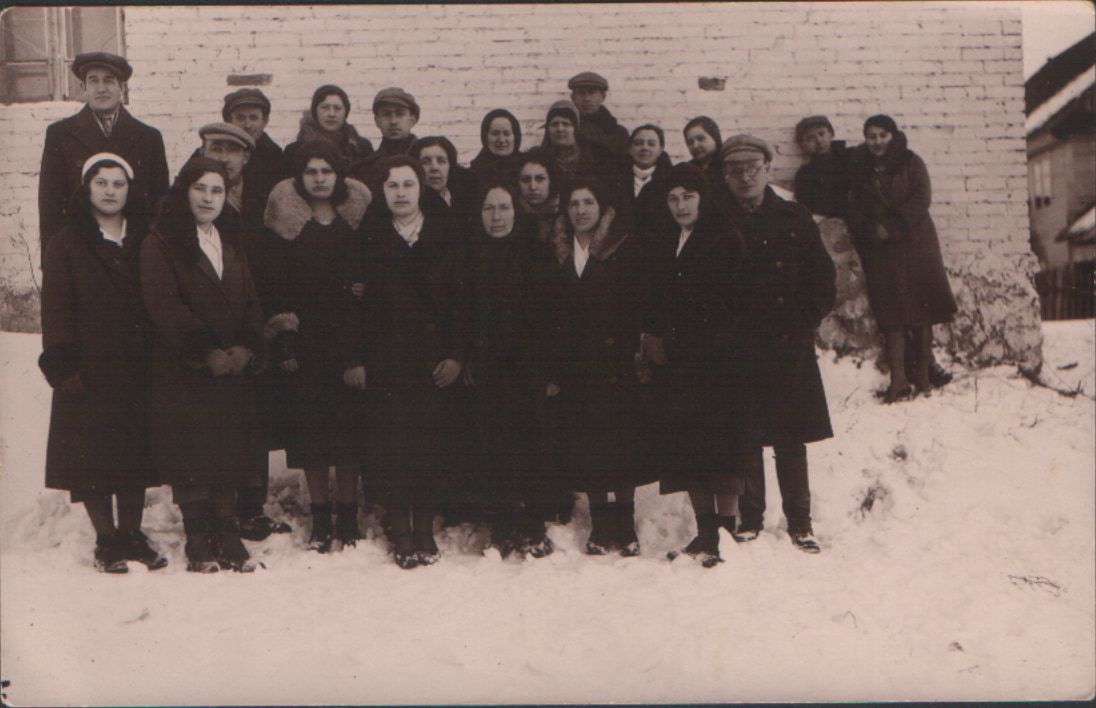
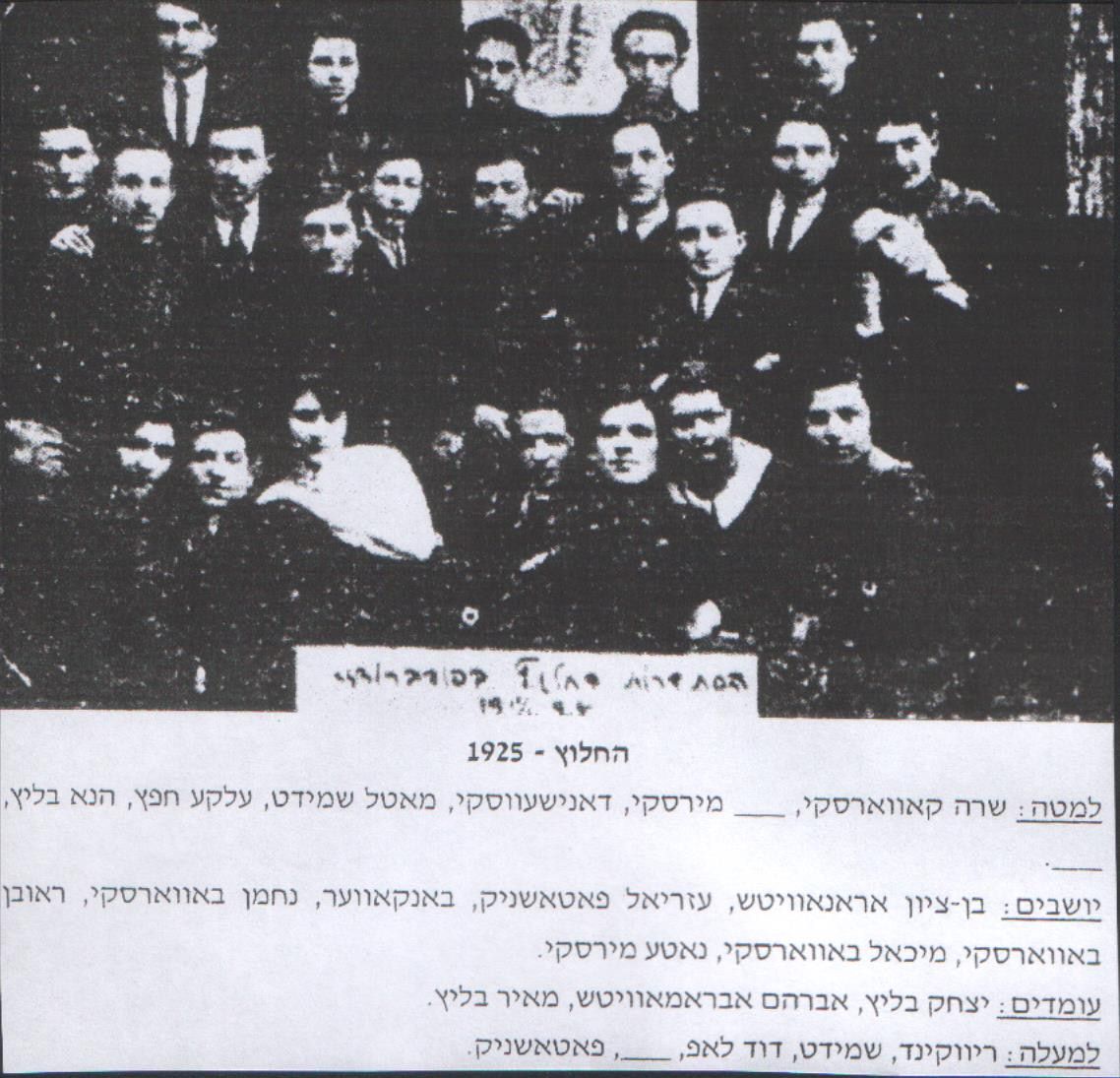
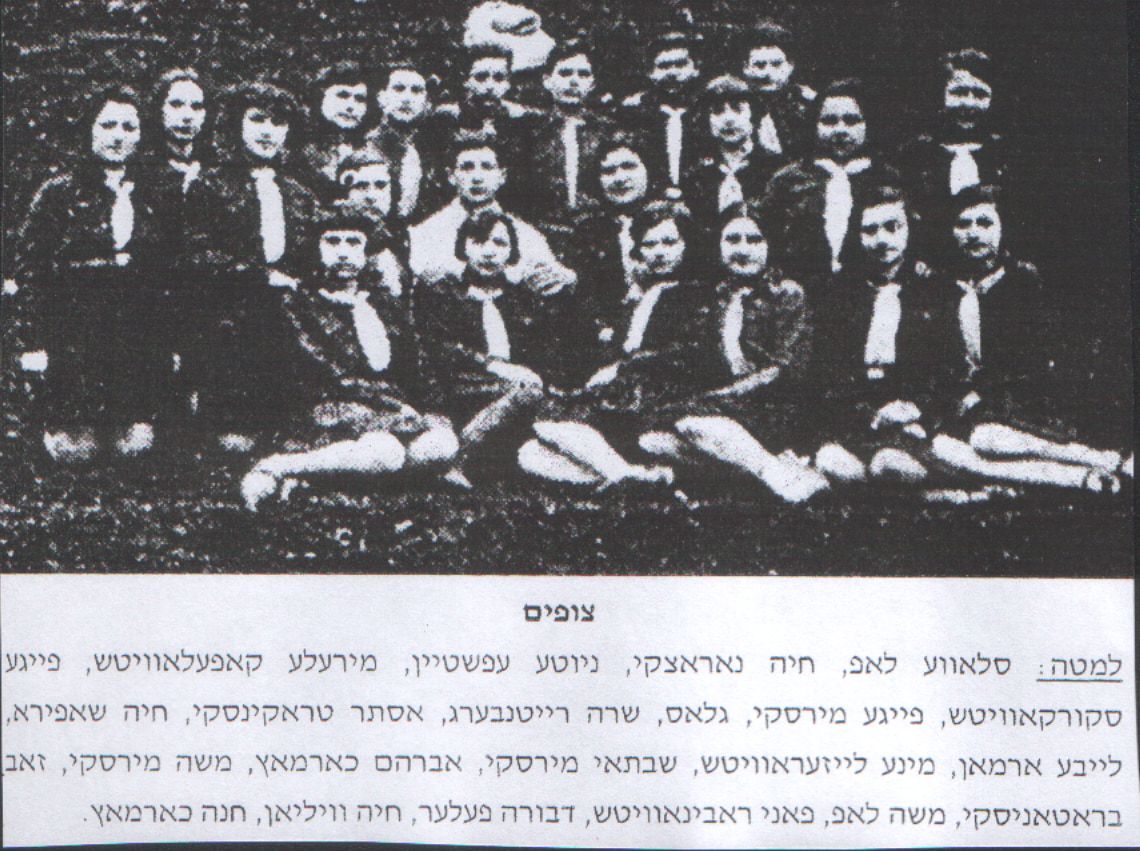
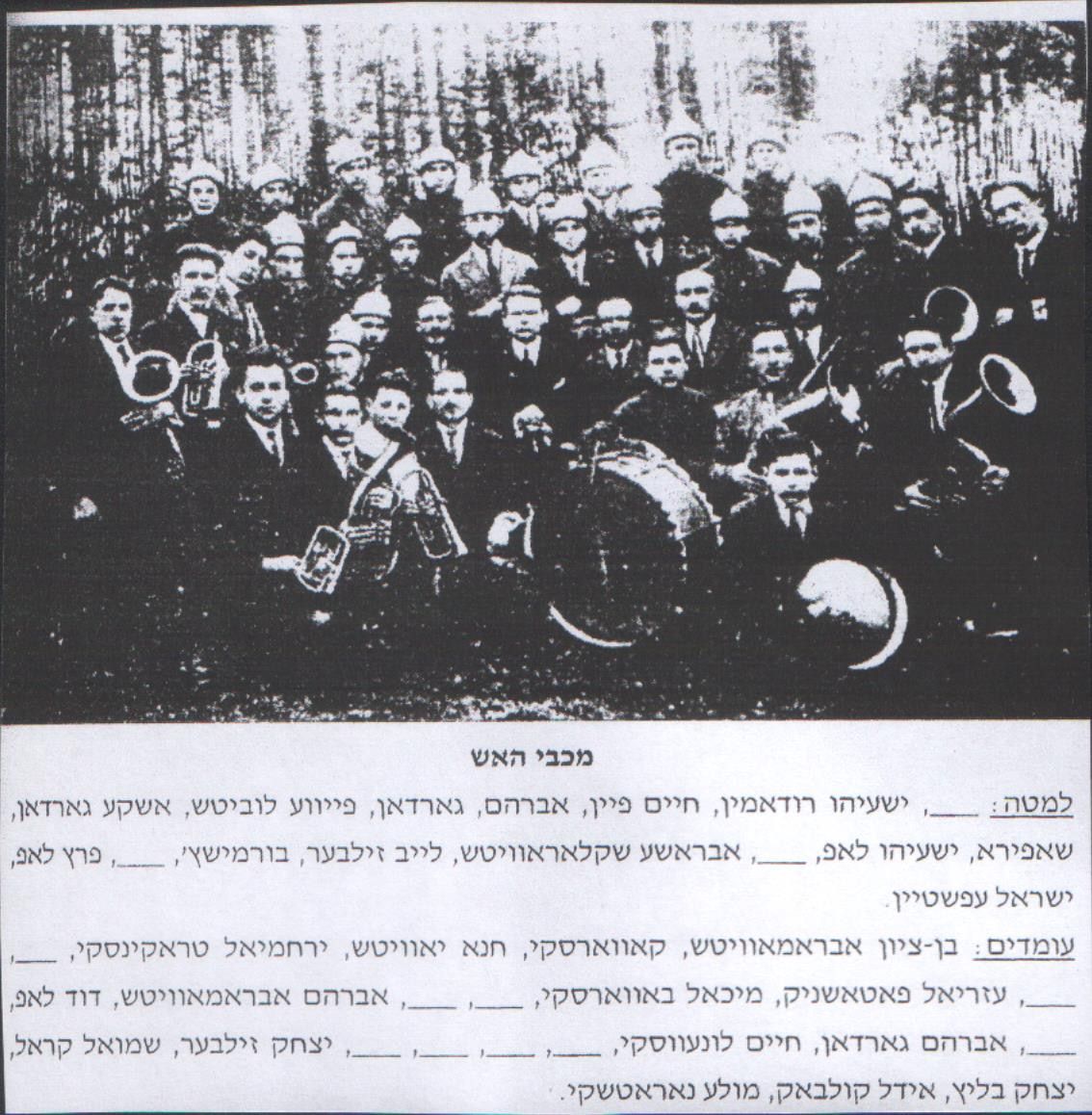
People of the town before the war
Community
The town had institutions and organisations for charity and for quiet acts of kindness. Giving in secret was taken for granted. The Jews of the town, who knew which families were in need and could not afford food, would send their children to them with the food covered, so as not to shame them. Almost every family “adopted” a poor person and looked after them, especially on Sabbaths and festivals.
There was a burial society, and a Jewish committee that saw to the needs of the needy: providing for brides, loans, the upkeep of Zionist institutions such as the Tarbut school — teachers’ salaries, the purchase of equipment, textbooks and more. At the head of the committee stood Rabbi Perski, the town’s rabbi. And in every house, of course, there was also a Jewish National Fund collection box.
The pride of the town was its magnificent public library, which held about 4,000 books in every language, including Hebrew and Yiddish. The library also served the hundreds of holidaymakers who came for three months every summer. It was housed in a separate building next to the school, which was unusual in those days. The moving spirit of the library and its chairman was the watchmaker Chaim Loniewski. He organised, catalogued, bought books, and spent days and nights in the library. He was one of the first to be killed when the war broke out. The library hall also served as a venue for performances and theatre. The holidaymakers were impressed, and carried the library’s fame throughout the Vilna region.
In a self-respecting town like Pabradė there was also an orchestra, which concentrated on and specialised in string instruments. They played mainly mandolins and guitars. The outstanding players were Chaim Loniewski, Abrasha Shklarovich, Chaim Fein and the three Babersky brothers. There was also a drama circle in the town; one of the directors was Eliyahu Licht, who staged plays such as “Tevye the Dairyman” and “Kuni Leml”. There was certainly something to be proud of.
Pabradė had a rich social and cultural life.
People and Stories
As in every shtetl, stories “went around” about somewhat unusual events and people. Such as Avrum Feigel, who would get drunk on Simchat Torah and go through the town merry with wine, making merry and calling out “tzon kedoshim” (“holy flock”), and the children would follow him with flags, shouting “tzigele meh” (“little goat, meh”), laughing and enjoying themselves. Avrum also had strange healing powers: if, for example, someone’s arm or leg hurt, he would put the aching limb into a crack and say a blessing. Did the treatment help? Opinions are divided.
Another odd character was Karpul Glass, who swam in all weathers, including in winter when snow was falling; he used to swim under the ice.
Meike Karol, Mulik’s cousin, a tall, broad-shouldered young man, was famous throughout the region as a great strongman. The Jews of the town were very proud of him, because he frightened the gentiles and did not hesitate to get into fights and beat them, so that they did not dare to start with him.
Passing Berl Fein’s house one had to keep absolutely quiet, because he was very anxious about his health. Heaven forbid that anyone should sneeze or cough near him. It was said that in winter he scattered sand in front of his feet so that he would not, heaven forbid, fall.
Fishel (der Shnayder) the tailor was a tall, handsome Jew with a white beard, devout and considered a great Torah prodigy. In his sweet voice, with a smile on his face, he sang as he worked — Torah melodies in Yiddish and Hebrew. Once a Polish officer, impressed by his personality, photographed him, and his picture was published in the Jewish newspaper in the United States; it was a source of pride for the town.
Let us add Reb Sheftel too, a Jew in his eighties, full of life, who loved to play draughts and chess, was learned in Gemara, and read modern literature — even novels. He loved concerts very much, and had a joke for everything and on every subject. He was a synthesis of the older generation and the young.
Moshe der Blecher, the tinsmith, was a kind-hearted Jew who loved children. He was in charge of the mikveh. Before Passover the children would come to him to scald the dishes for the festival. He treated the custom with holy awe, and would check again and again that the children had done the job properly.
Feige Babersky’s food shop was very well known; on Friday the pots of cholent were brought there, and there they cooked in the oven and baked through the night. On Sabbath at noon representatives of each family would walk home with the steaming pots, and the heavenly smells that wafted from them whetted the appetite.
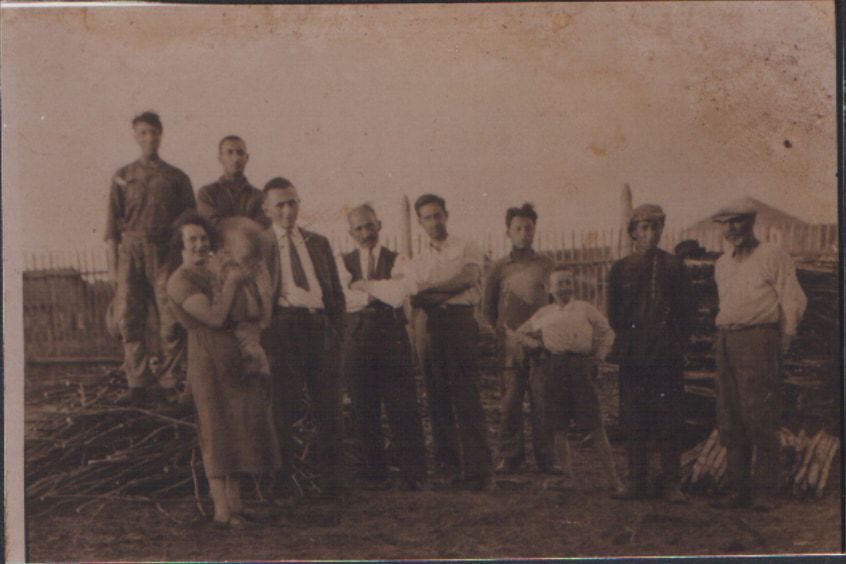
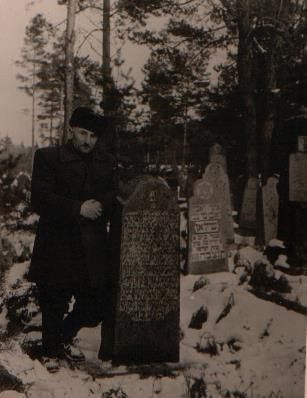
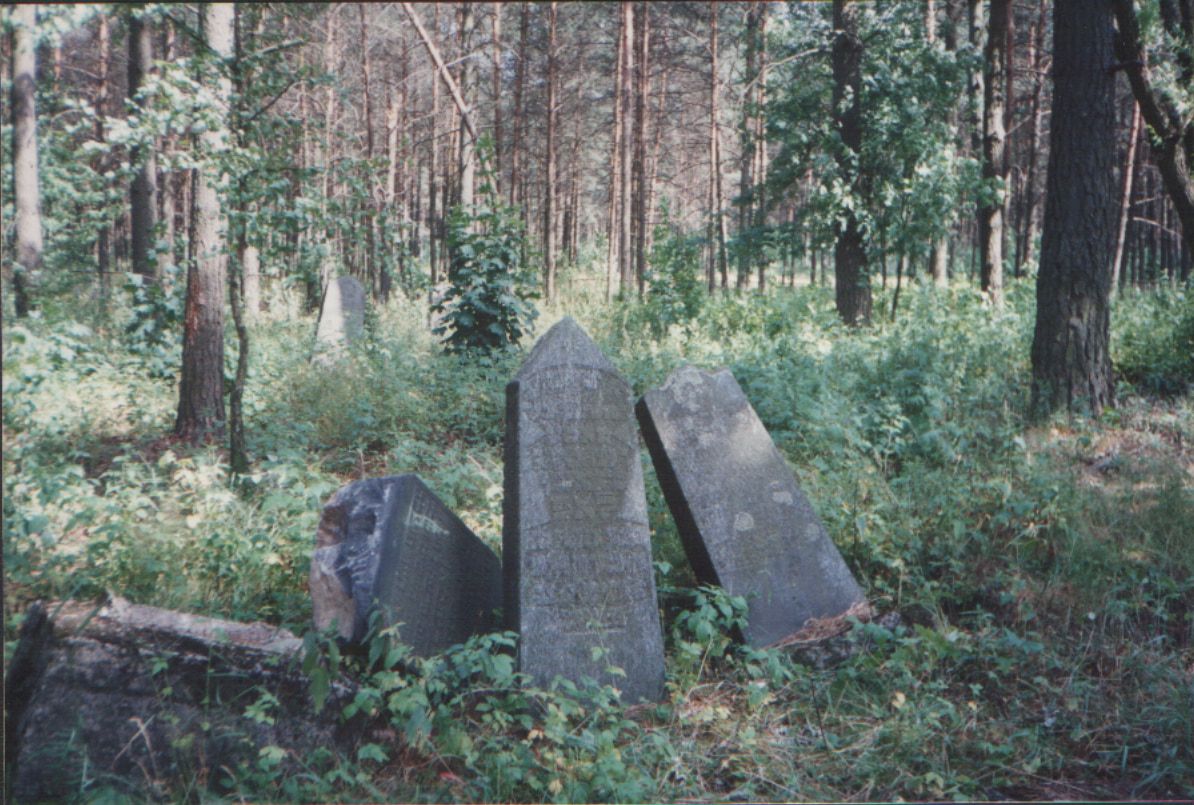
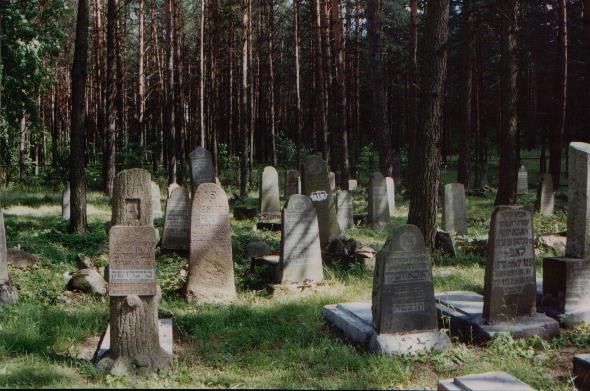
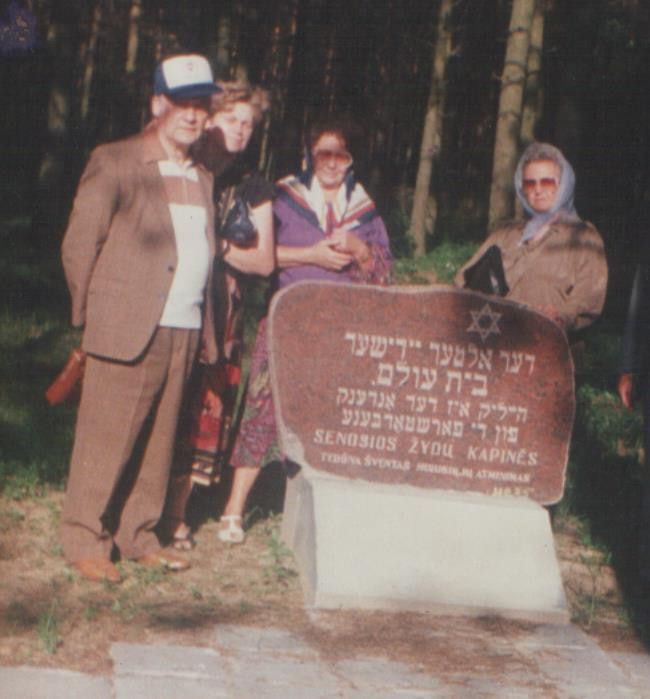
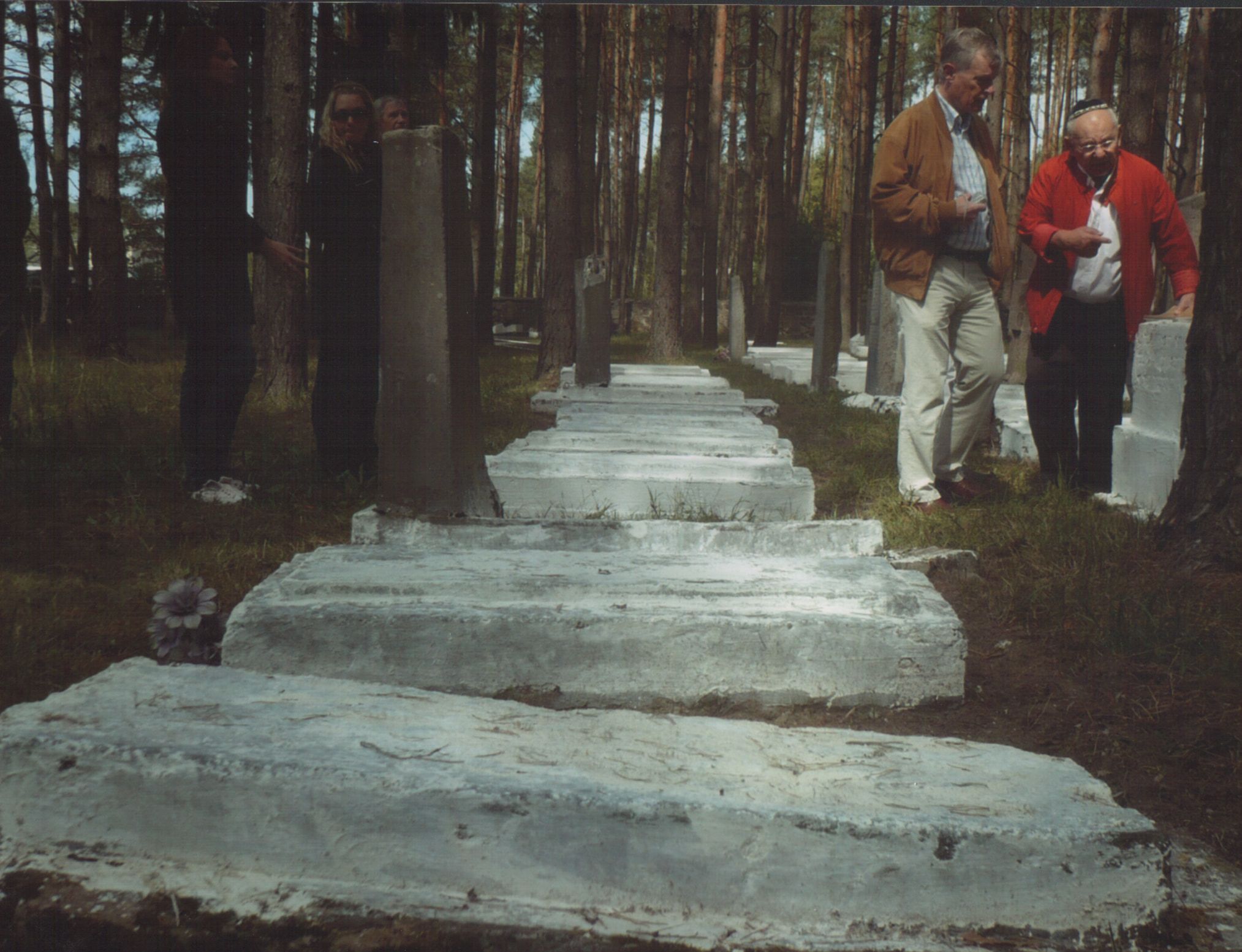
The Cemetery
No shtetl is without a Jewish cemetery; here it lay beyond the railway line.

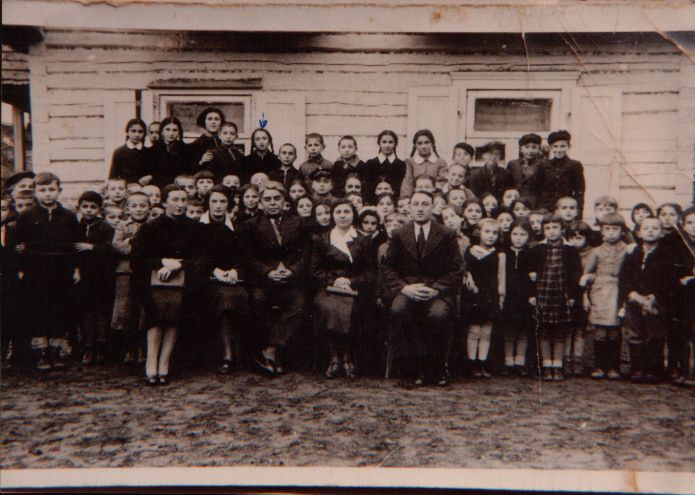
A class of Tarbut school pupils — 1939. Most of them would not live to see 1942.
That summer, the war broke out.